
A Smarter Caesar Salad: More Protein, More Fibre, More Satisfaction
Nothing says summer quite like a Ceaser salad, It's crisp, savoury, and satisfying, but from a nutrition standpoint, the Caesar salad often is high in fat and low in nutrients. An average Caesar salad is high in fat low in protein in fibre…
A traditional Caesar is mostly romaine and croutons, smothered in a dressing made mainly of egg yolk, oil and cheese.
That makes it tasty, but it also means the dish leans heavily on saturated fat while offering relatively little protein or fibre — the two things that actually keep you satiated and support muscle and metabolic health, especially through the menopause transition.
The good news: you don't have to give up the Caesar. You just have to rebuild it. Here's how I turned this one into a meal that holds its own.
Start with the dressing
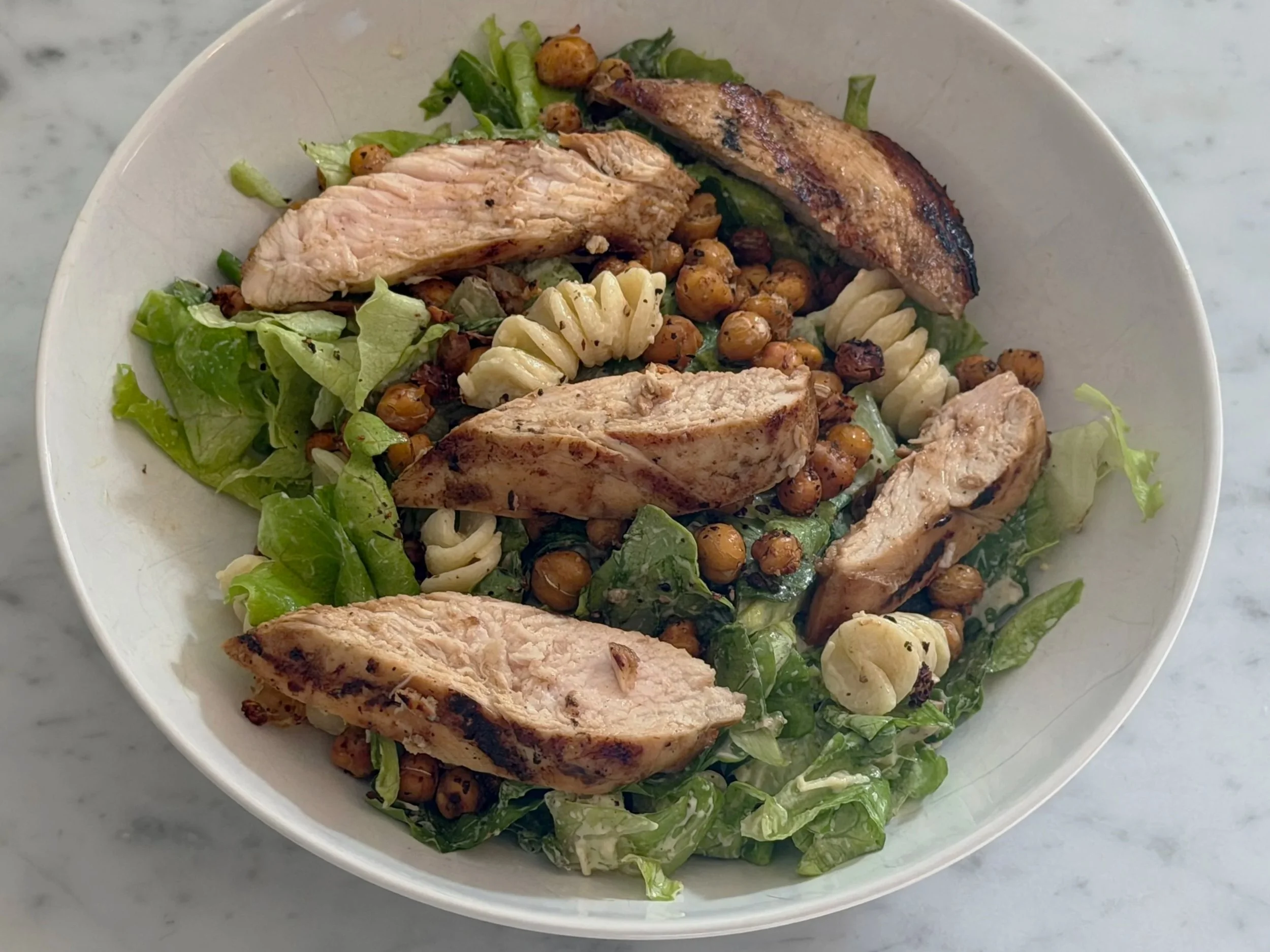
The dressing is where a Caesar usually picks up most of its saturated fat — and where the easiest upgrade lives. I swapped the heavy base for high-protein Greek yogurt, then built the flavour back with the things that make a Caesar taste like a Caesar: Dijon mustard, anchovy, Worcestershire sauce, and a squeeze of lemon juice.
You keep the sharp, salty, savoury punch. What changes is what the dressing brings to the bowl: Greek yogurt adds protein and a creamy texture, while trimming the saturated fat compared to a classic emulsion. Same craving satisfied, more nutrition behind it.
Swap the croutons for roasted chickpeas
Croutons are pure crunch — they add texture and refined carbohydrate, but little else. Roasted chickpeas do the crispy, seasoned job just as well, and they bring fibre and plant protein along with them.
Roast them until golden and crisp, season generously, and scatter them over the top. They hold up in the bowl, and they're the kind of swap you won't feel like you're settling for.
Add pasta for staying power
A small handful of spiral pasta might feel like an unexpected addition to a Caesar, but it's a deliberate one. Carbohydrates give the meal staying power and make it feel like an actual meal rather than a starter. Paired with protein and fibre, those carbs digest more steadily — which supports more even energy after you eat.
You don't need much. Just enough to round the bowl out and carry you to the next meal.
Finish with protein
Top the bowl with grilled chicken (or your protein of choice), and the meal comes together. Now you've got protein from three places — the yogurt dressing, the chickpeas, and the chicken — working alongside fibre from the chickpeas and greens.
That protein-and-fibre pairing is the whole point. Through the menopause transition, declining estrogen is associated with changes in muscle mass and metabolism, and getting enough of both nutrients at a meal supports satiety, steadier energy, and muscle maintenance. Nutrition is one tool among several — it works best alongside sleep, movement, and stress management — but a balanced plate is a genuinely useful place to start.
The takeaway
A regular Caesar salad isn't doing much for you, and it's often higher in saturated fat than you'd guess. But with four small swaps — a yogurt-based dressing, roasted chickpea “croutons,” a little pasta, and a solid protein on top — it becomes a balanced meal that still tastes like the thing you were craving.
You don't have to overhaul your favourites. You just have to build them a little smarter. #Eatbetternotless
Click here for a step-by-step recipe
Meal Prep as a Form of Self-Care During the Menopause Transition
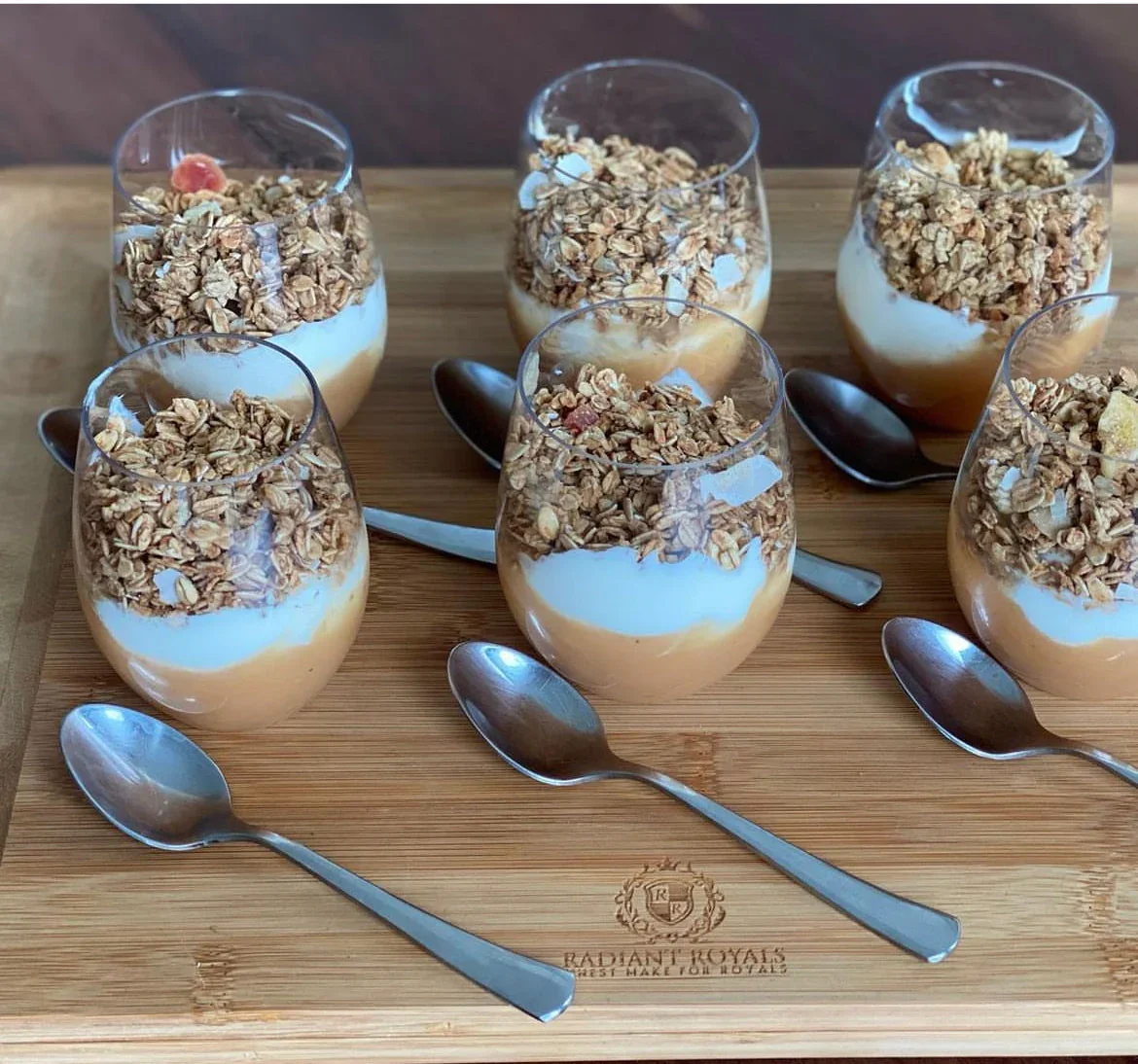
If you’re juggling a career, kids, aging parents, and your own changing body, meal prep might sound like one more thing on your to-do list. But Wednesday you will thank Sunday you, meal prepping isn’t about perfection; it’s about making life easier for future you.
When you’re navigating perimenopause or menopause, planning ahead can feel like an act of self-care. Hormonal shifts can affect sleep, mood, hunger, and energy levels. The days you’re tired or foggy are exactly when impulsive choices sneak in—not because of a lack of willpower, but because your brain and body are asking for relief. Having balanced, ready-to-go meals on hand makes it easier to meet your needs with care instead of chaos.
During midlife, many women feel stretched between responsibilities: career deadlines, school pickups, and sometimes caregiving for parents. Nutrition often takes a back seat. But consistent, balanced eating helps stabilize energy, regulate mood, and support muscle and bone health (which both decline after menopause).
Meal prepping helps you stay consistent even when life feels unpredictable. Think of it as taking one hour on Sunday to buy back calm and nourishment all week long.
Start Small... Meal prep doesn’t have to mean perfectly portioned containers lined up on your counter. Start with one simple task:
Wash berries for quick breakfasts
Chop vegetables ahead of time
Cook extra protein for easy mix-and-match meals
Small steps lead to big wins in consistency. Over time, you’ll notice fewer takeout nights, less food waste, and a stronger sense of control over your week.
Meal prep doesn't have to be elaborate, it can be as simple as planning a few staple balanced snacks for the week or washing and chopping veggies ready for use.
It is highly unlikely you are going to shred cabbage or dice peppers when you are hungry and making a meal but if they are ready to go it is highly likely you will through prepped veggies into wraps, omelettes and salads adding fibre, antioxidants to your meals.
Pick a level of prepping that suits you it needs to be functional not instagram worthy.
Basic: Wash, chop, or marinate ingredients (shredded cabbage, carrot sticks, washed berries and greens)
Moderate: Prep breakfasts and lunches for 3–4 days; plan and portion snacks.
Advanced: Batch-cook dinners or freezer “dump” meals for effortless weeknights.
Find the rhythm that works for you,
Create a master list of easy, balanced recipes that you actually enjoy. Look for meals that include protein, fibre, healthy fats and colour, these support satiety, and digestion.
And if your weeks feel like a blur? That’s okay. Each small system you build washing, chopping, freezing is one less decision your tired mind has to make later.
Too Good to Be True? How to Navigate Supplements and the Monetization of Menopause
Too Good to Be True? How to Navigate Supplements and the Monetization of Menopause
When you're navigating menopause, the supplement aisle suddenly feels personal. Hot flashes, sleep, brain fog, bone health, mood — there's a pill, powder, or gummy promising to fix every one of them. So which actually work, and which are just expensive pee?
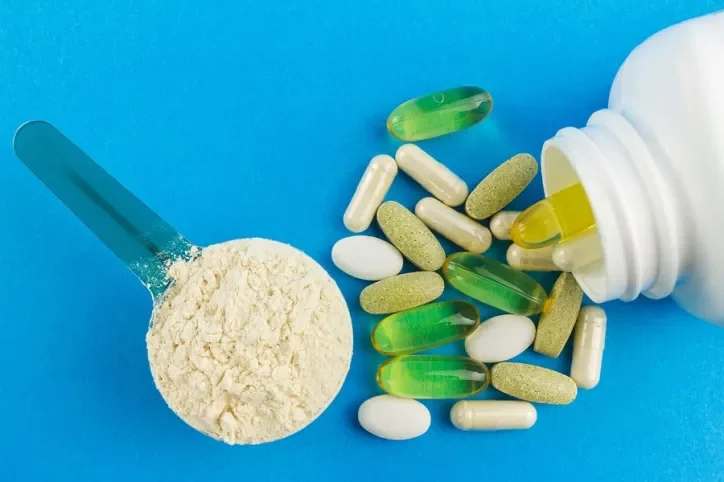
First, a definition. A dietary supplement is a product, a pill, capsule, powder, or liquid, meant to add nutrients (vitamins, minerals, herbs, amino acids) to your diet. The key word is supplement: it's designed to fill a gap, not replace real food. And that's where most of the marketing falls apart.
One of the first things that stuck with me in my nutrition degree was the concept of "expensive pee." Many water-soluble vitamins, like B and C, simply get excreted when you take more than your body needs. You're often paying for very expensive urine. (Worth knowing: this doesn't apply to fat-soluble vitamins like A, D, E, and K, which your body stores — so with those, more isn't harmless, it can build up to unsafe levels.)
What got under my skin is that people genuinely trying to feel better are left wading through poorly regulated products, exaggerated promises, and research that's often skewed by money and marketing. A big red flag: when nutrition "information" arrives attached to a discount code.
So what's actually worth it in menopause?
Here's the reassuring part: the food-first approach covers most of your bases. A pattern rich in protein, fibre, fruits, vegetables, and whole foods does more for the menopause transition than almost anything in a bottle. Supplements work best when they fill a specific, identified gap, not as a scattergun.
Two that come up again and again for menopausal women, with real evidence behind them, are calcium and vitamin D — together they support bone health as declining estrogen accelerates bone loss. Vitamin D is also hard to get from food alone, especially through a Canadian winter, which is why it's one of the few supplements widely recommended in this stage of life. (What's right for you depends on your diet, bloodwork, and health history — that's a conversation for your doctor or dietitian, not a label.)
How to tell good research from good marketing
When a claim sounds impressive, run it through a few quick checks:
Who funded it? Independent or government-funded research is generally more trustworthy than a study paid for by the company selling the product.
Conflicts of interest? Look for financial ties between the researchers, influencers, promoters and the product.
Peer-reviewed? Studies vetted by other experts and published in reputable journals are more reliable.
Study design and size. Well-run randomized controlled trials with larger samples carry more weight than small or poorly designed ones.
Has it been replicated? One study is a starting point, not a verdict. Repeated results from different teams matter.
Does it fit the wider evidence? Outlandish claims that contradict everything else deserve extra scrutiny.
Are limitations acknowledged? Honest research names its own gaps. Marketing rarely does.
No single study settles anything, and the science evolves. The smartest move is to look at the overall body of evidence — and when in doubt, ask an accredited professional rather than a brand.
Because if it sounds too good to be true, it usually is.
When you're navigating menopause, the supplement aisle suddenly feels personal. Hot flashes, sleep, brain fog, bone health, mood — there's a pill, powder, or gummy promising to fix every one of them. So which actually work, and which are just expensive pee?
First, a definition. A dietary supplement is a product — a pill, capsule, powder, or liquid — meant to add nutrients (vitamins, minerals, herbs, amino acids) to your diet. The keyword is supplement: it's designed to fill a gap, not replace real food. And that's where most of the marketing falls apart.
One of the first things that stuck with me in my nutrition degree was the concept of "expensive pee." Many water-soluble vitamins — like B and C — simply get excreted when you take more than your body needs. You're often paying for very expensive urine. (Worth knowing: this doesn't apply to fat-soluble vitamins like A, D, E, and K, which your body stores — so with those, more isn't harmless, it can build up to unsafe levels.)
What got under my skin is that people genuinely trying to feel better are left wading through poorly regulated products, exaggerated promises, and research that's often skewed by money and marketing. Spending money that could be spent on actual support such as better quality food or a gym membership.
A big red flag: when nutrition "information" arrives attached to a discount code.
So what's actually worth it in menopause?
Here's the reassuring part — the food-first approach covers most of your bases. A pattern rich in protein, fibre, fruits, vegetables, and whole foods does more for the menopause transition than almost anything in a bottle. Supplements work best when they fill a specific, identified gap, not as a scattergun.
Two that come up again and again for menopausal women, with real evidence behind them, are calcium and vitamin D — together they support bone health as declining estrogen accelerates bone loss. Vitamin D is also hard to get from food alone, especially through a Canadian winter, which is why it's one of the few supplements widely recommended in this stage of life. (What's right for you depends on your diet, bloodwork, and health history — that's a conversation for your doctor or dietitian, not a label.)
How to tell good research from good marketing
When a claim sounds impressive, run it through a few quick checks:
Who funded it? Independent or government-funded research is generally more trustworthy than a study paid for by the company selling the product.
Conflicts of interest? Look for financial ties between the researchers and the product.
Peer-reviewed? Studies vetted by other experts and published in reputable journals are more reliable.
Study design and size. Well-run randomized controlled trials with larger samples carry more weight than small or poorly designed ones.
Has it been replicated? One study is a starting point, not a verdict. Repeated results from different teams matter.
Does it fit the wider evidence? Outlandish claims that contradict everything else deserve extra scrutiny.
Are limitations acknowledged? Honest research names its own gaps. Marketing rarely does.
No single study settles anything, and the science evolves. The smartest move is to look at the overall body of evidence — and when in doubt, ask an accredited professional rather than a brand.
Because if it sounds too good to be true, it usually is.